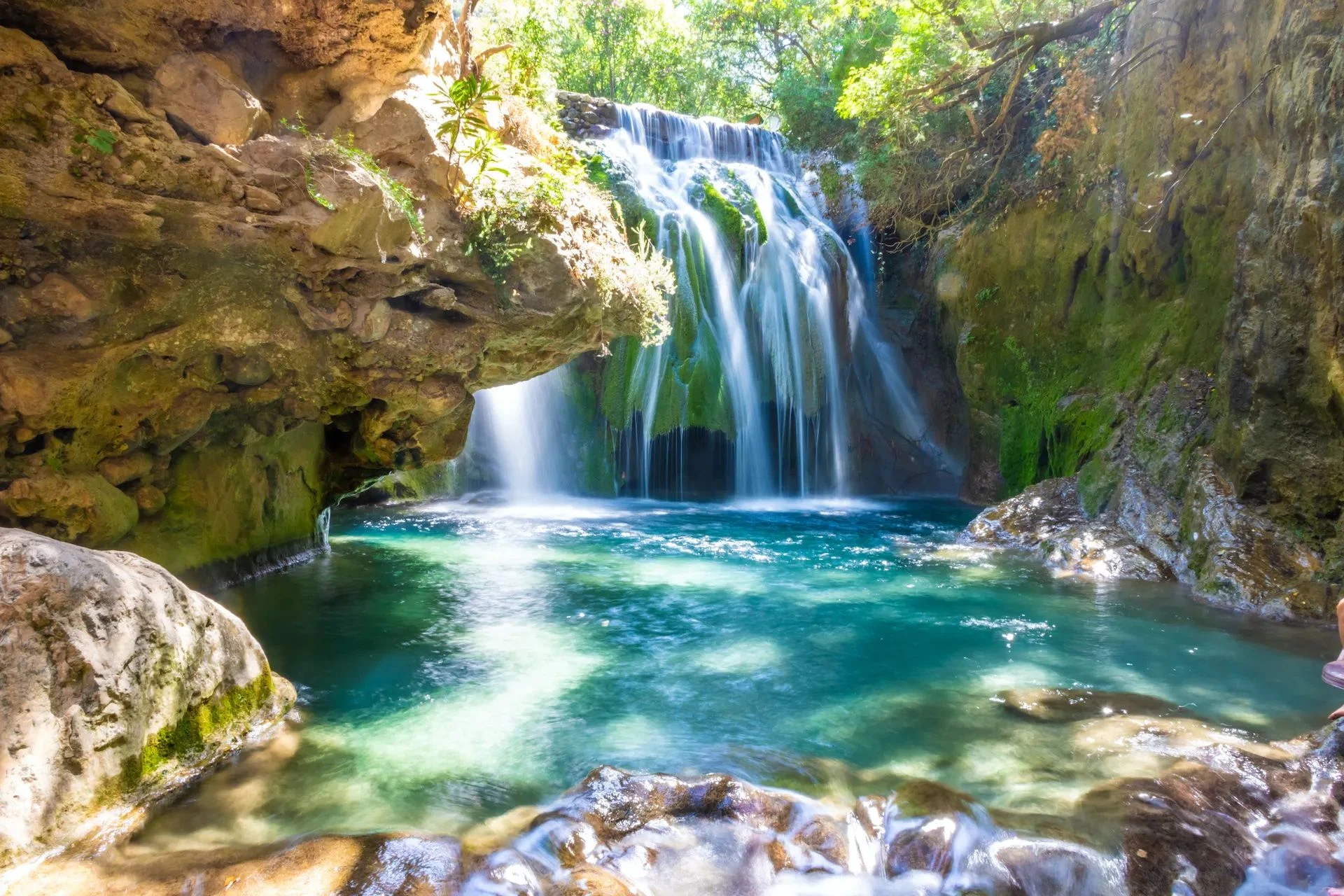
Grand Cascade
The primary waterfall drops into a turquoise pool, surrounded by vertical rock faces. It serves as the main destination for those trekking the upper trail.
View from the base for the full scale of the falls.

Akchour Waterfalls lies 45 minutes northeast of Chefchaouen in the Talassemtane massif, anchoring a circuit that climbs through cedar forest and river gorge to a 100-meter cascade. The village serves as trailhead for two routes—one to the lower God's Bridge, the other to the upper falls—each drawing weekend crowds from Tangier and Tétouan. This guide answers whether the hike, logistics, and scenery warrant a day outside the blue medina.
Quick answer
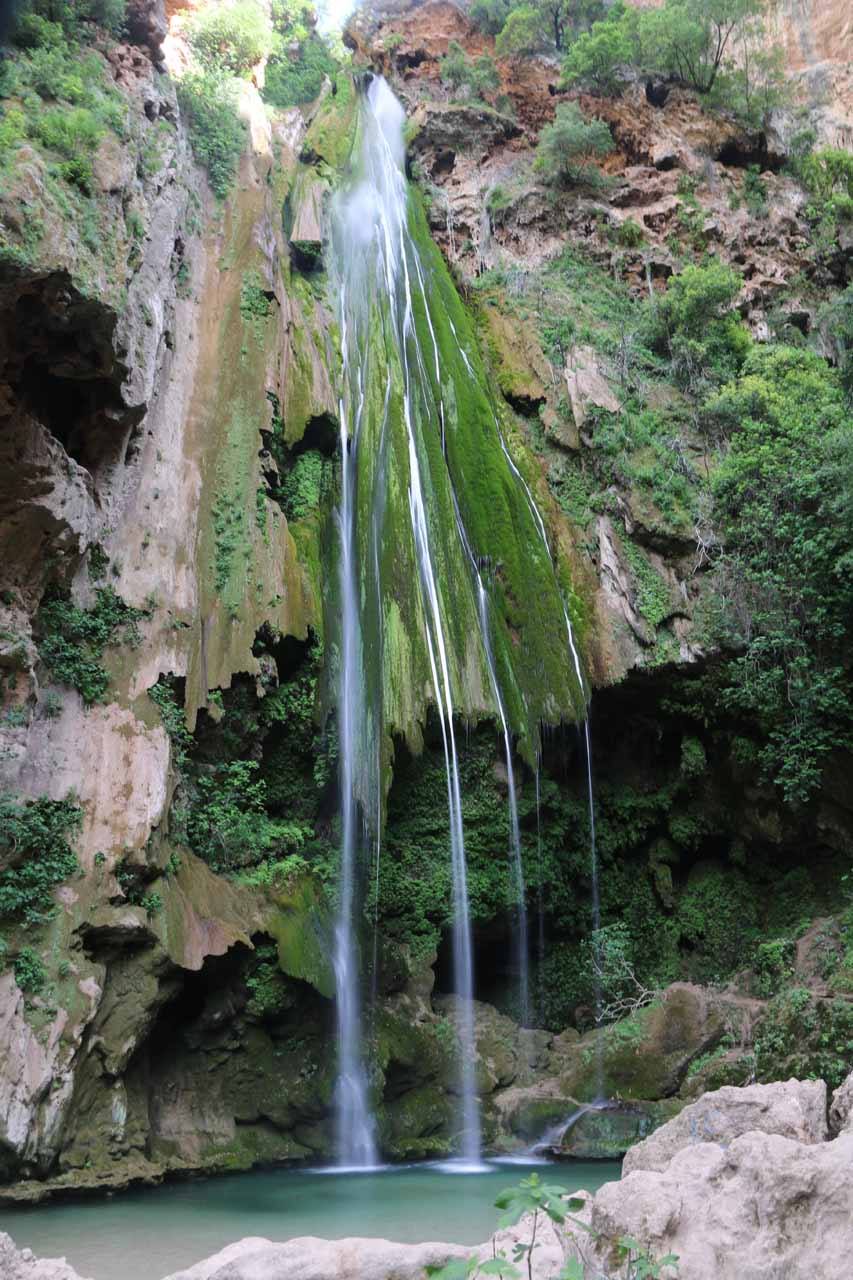
Chefchaouen is worth visiting for Akchour Waterfalls if you prioritize mountain trails over urban sightseeing. The upper falls trail covers roughly 9 kilometers round-trip through Talassemtane National Park, open daily with no entrance fee. Early-morning starts between 08:00 and 10:00 avoid midday heat and weekend congestion. The payoff is a cascading gorge, cedar shade, and solitude rare in northern Morocco's tourist corridor.
The upper waterfall trail begins where the paved road ends at Akchour village, a cluster of cafés and mule operators straddling the river that feeds both cascades. Most visitors arriving from Chefchaouen underestimate the gradient—the first two kilometers follow a graded dirt track, but the final approach narrows into boulder scrambles and log crossings that demand ankle support and dry-weather timing. Rainfall between November and March swells the Farda River, turning the cascade into a thundering column but rendering the upper trail slick and occasionally impassable. Summer months see the flow taper to a ribbon, yet the canopy and elevation keep temperatures below the plains. The lower circuit to God's Bridge, a natural limestone arch spanning the gorge, takes ninety minutes round-trip and suits families unwilling to commit to the longer trek. Both trails share the same trailhead and initial approach, creating bottlenecks on Friday afternoons and Sundays when domestic groups converge. Weekday mornings restore the silence that made Talassemtane National Park a hiking destination before paved access arrived in the early 2010s. Guides linger at the village square offering navigation and mule support; the trail is waymarked and requires neither, though a local companion adds context to the Berber terraces and cork-oak management visible from the ridge. Chefchaouen itself functions as the logistical anchor—grand taxis and private transfers depart the Bab Souk stand daily, returning by late afternoon to sync with medina dinner hours. The Rif peaks surrounding Akchour rise above 2,000 meters, a geography that isolates the waterfalls from the coastal humidity blanketing Tétouan and delivers the crisp air absent from the blue city's alleys. Whether visiting Chefchaouen for Akchour justifies the journey hinges on appetite for unmanicured trails; the cascade lacks guardrails, cafés, or infrastructure beyond the village threshold, a rawness that either anchors or undermines the detour depending on expectation. Photographers favor the middle gorge section an hour into the ascent, where the riverbed widens and cedars frame the ridgeline without requiring the full summit push. The upper falls themselves occupy a natural amphitheater, the plunge pool shallow enough for wading in July and August. Return descent takes roughly two hours, the downhill grade stressing knees on the rockier passages. A handful of riverside guesthouses in Akchour village offer overnight stays for those splitting the trek across two days or linking onward to the Jebel Tissouka circuit.
“The cascade lacks guardrails, cafés, or infrastructure beyond the village threshold, a rawness that either anchors or undermines the detour depending on expectation.”
The optimal time to visit Akchour Waterfalls is during the spring or autumn months to balance comfortable hiking temperatures with consistent water flow. For the daily experience, early arrival is the most effective way to manage the trail environment.
Mild, 18°C–25°C. Ideal for hiking.
Vegetation is lush and waterfalls are active.
Mild, 17°C–24°C. Stable conditions.
Clear skies and moderate temperatures make for consistent trekking.
—
The best arrival window is 08:00–10:00 to avoid peak midday heat and large weekend crowds.
Hot, 28°C–35°C. High heat.
Water levels may decrease and trails become congested during weekends.
Verdict: Plan your visit for Tuesday to Thursday, arriving between 08:00–10:00 during the months of April or October.
The Akchour Waterfalls are located within Talassemtane National Park, approximately 30 kilometers from Chefchaouen. The most reliable way to reach the trailhead is by private vehicle or shared taxi.
Grand Taxi from Chefchaouen main station to Akchour village
Drive via N13 and R416 to the designated parking area
From the village bridge to the trailhead
The trail begins near the parking lot at the village entrance. Arrive between 08:00 and 10:00 to secure parking and avoid congestion on the trail.
This itinerary suits hikers comfortable with moderate terrain and covers a full day from Chefchaouen, including travel and trail time. Budget 7–8 hours round-trip to reach the Grand Cascade and return to the city.
Leave early to reach the trailhead by 08:30, allowing time for the 30-minute drive and parking. Early starts help you avoid midday heat and weekend crowds.
Start the hike from Akchour village, following the well-marked path along the river. The first section is gentle and shaded, ideal for warming up.
Stop at Pont de Dieu, a natural rock arch spanning the gorge, roughly halfway to the Grand Cascade. Most hikers pause here for photos and water.
The trail climbs more steeply in the final stretch, ending at the 100-meter waterfall. Plan 30–45 minutes to rest, eat, and take in the view before heading back.
Retrace your steps downhill, which typically takes 90 minutes. The descent is easier on the legs but watch footing on loose sections.
Drive back to the city, arriving by early evening with time to rest or explore the medina.
The Akchour Waterfalls, located within Talassemtane National Park, offer distinct natural formations that contrast with the urban environment of Chefchaouen. These features define the area's geological character and provide varied terrain for hikers.
The primary waterfall drops into a turquoise pool, surrounded by vertical rock faces. It serves as the main destination for those trekking the upper trail.
View from the base for the full scale of the falls.
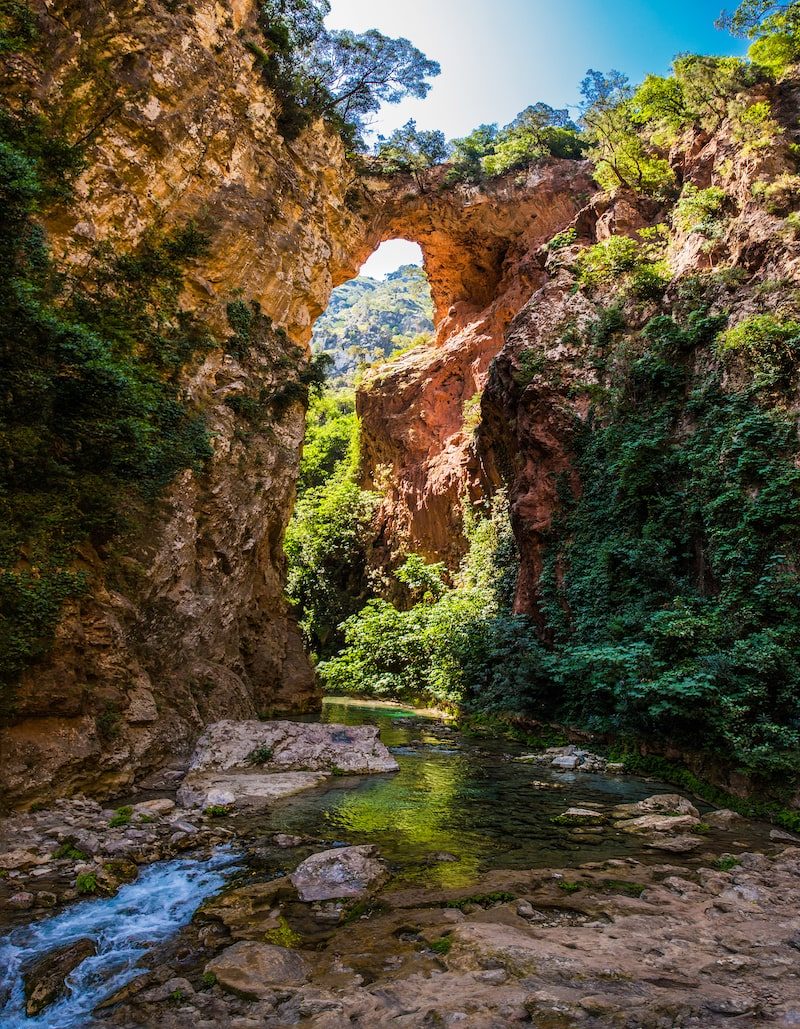
A natural stone arch spans the Farda River, formed by erosion high above the water. This geological formation creates a shaded passageway across the canyon.
Cross the bridge to see the river canyon below.
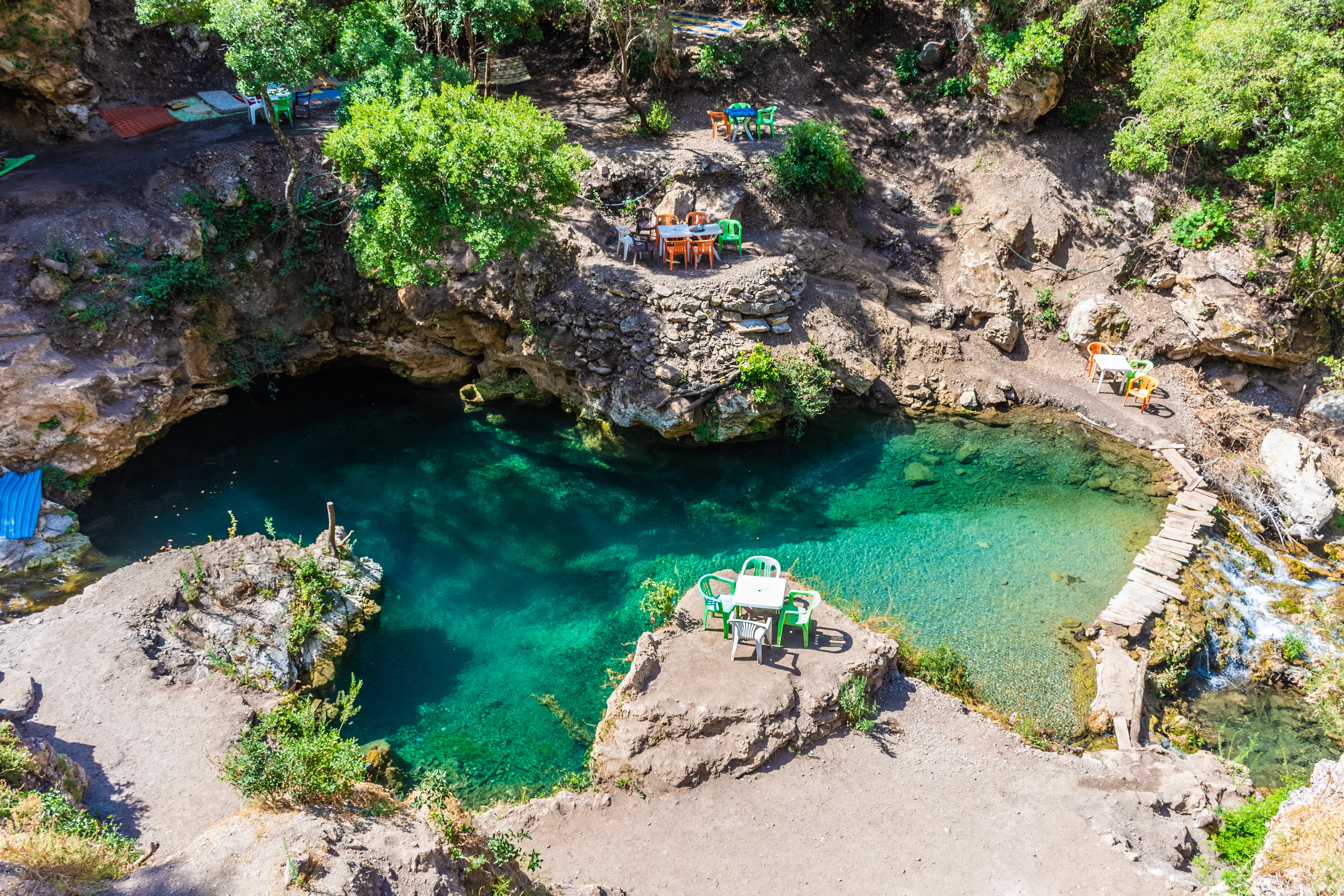
These clear, cold basins are located along the trail leading to the main waterfall. They provide a space to observe the limestone riverbed.
Stop here to photograph the water clarity.
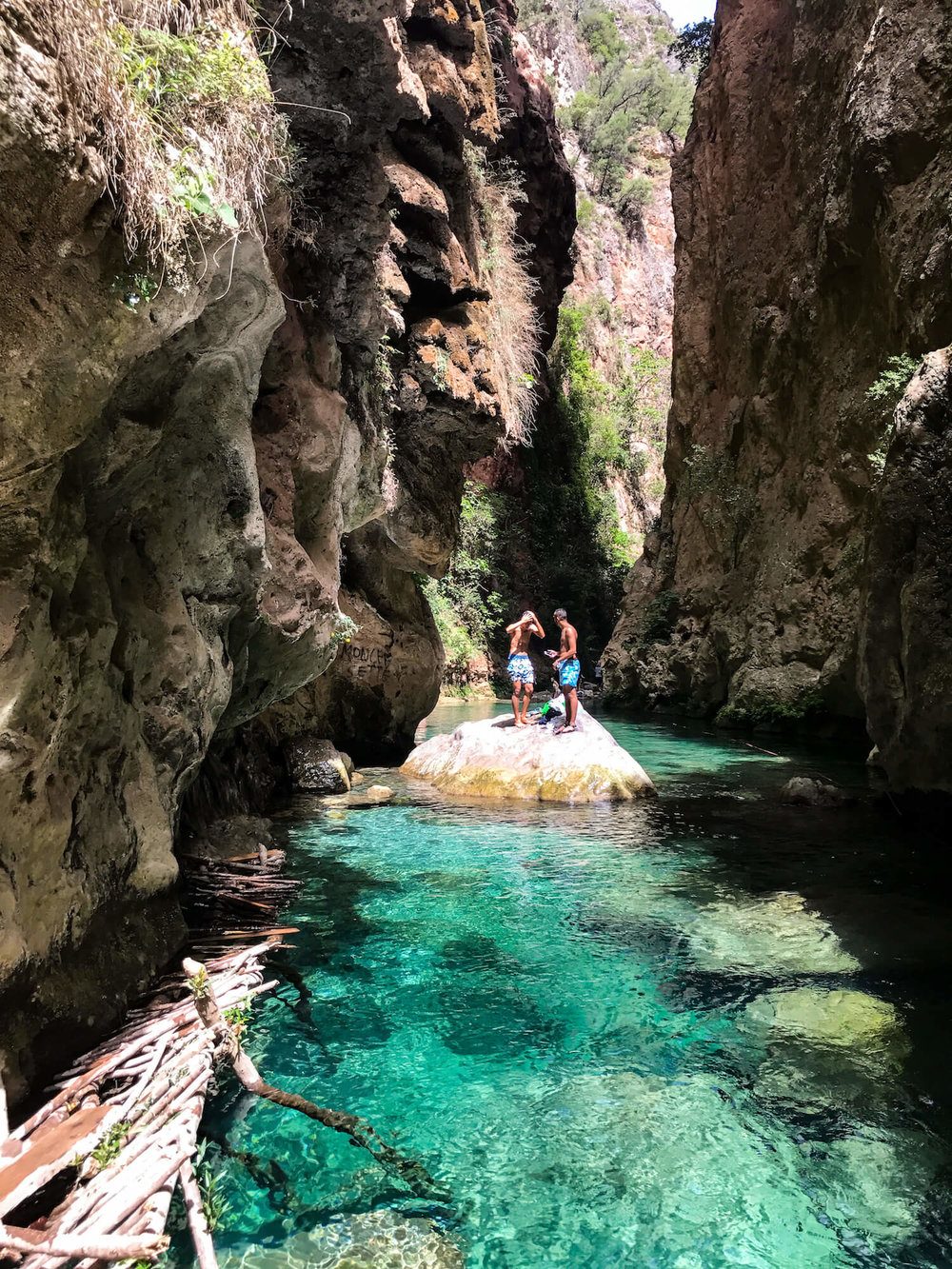
The path follows the river, flanked by dense vegetation and limestone cliffs. It offers a temperate environment even when temperatures rise.
Walk during the recommended arrival window for lighting.
Experienced hikers prioritize specific preparation and trail awareness to navigate the Talassemtane National Park terrain efficiently.
Wear sturdy hiking boots with aggressive tread as the limestone rocks become slippery when wet. Avoid standard street sneakers to prevent ankle injuries on uneven sections.
Pack a high-capacity water bladder rather than single-use bottles to remain hydrated throughout the climb. Refill stations are limited, and carrying three liters per person is standard for this terrain.
Cross the small wooden bridges with caution, as they often lack handrails and show signs of wear. Step toward the center of the wooden planks to ensure maximum stability.
Exercise extreme care if swimming in the plunge pools near the waterfalls. Submerged boulders and varying water depths make diving unsafe, so always enter slowly from the edge.
Keep the main river trail in sight, as secondary paths used by local goats often lead away from the primary route. If the trail becomes faint, return to the riverbank to regain your bearings.
Everything you need to know about is chefchaouen worth visiting
Many travelers find that is chefchaouen worth visiting specifically for the proximity to the Rif Mountains and the natural beauty of the waterfalls. The cascades offer a refreshing contrast to the urban atmosphere of the medina. Exploring the northern landscapes confirms that is chefchaouen worth visiting for nature lovers. You will find that the surrounding Talassemtane National Park enhances the overall experience.