
English| USD
Suggested for you
More currencies
Choose a language
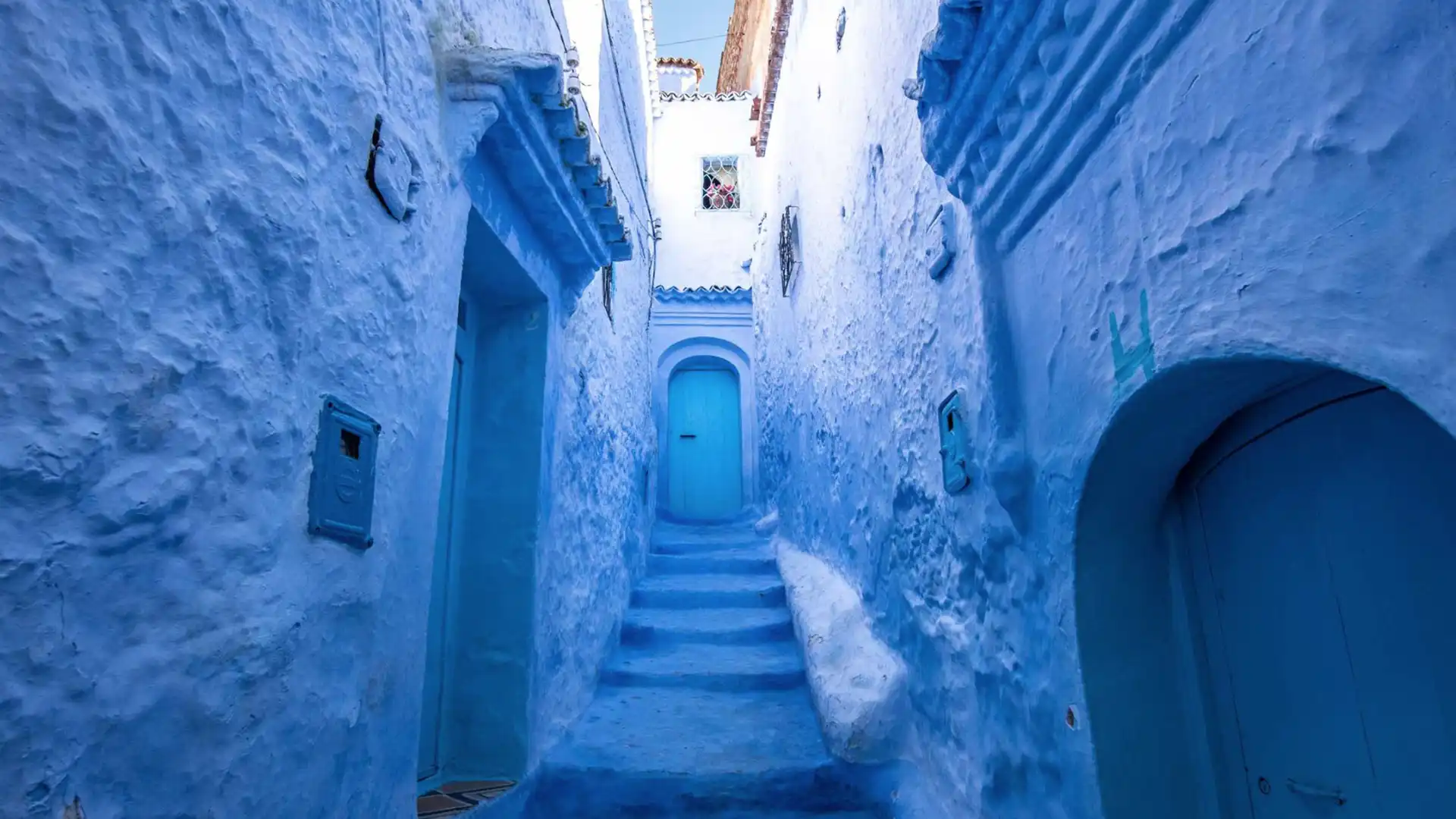
Chefchaouen sits 64 kilometers south of the Rif Mountains' northern edge, a town of 42,000 whose medina walls glow cobalt at every turn. Most visitors wonder whether one night is enough or whether three days stretches too long. The answer depends on whether Akchour Waterfalls features in your plans.
Quick answer
Two full days in Chefchaouen allow you to explore the medina's blue-washed alleys and complete the Akchour Waterfalls hike without rushing. Add a third day if you want to visit Ras El Maa spring, trek to the Spanish Mosque at sunset, or simply absorb the town's rhythm at a slower pace. One night suffices only if you skip the waterfalls entirely.
The trail to Akchour's God's Bridge and cascades consumes six to eight hours round-trip from the village trailhead, and that figure does not account for the 45-minute drive each way from Chefchaouen's medina. Factor in an 08:00 departure to avoid mid-day heat and you are committing an entire day to the hike. The medina itself demands attention—Place Outa el Hammam, the kasbah museum, the tanneries east of Bab El Ain, and the photogenic staircases that climb toward Jemaa Bouzafar all require daylight and functioning legs. Rushing both experiences into 36 hours leaves you with neither done well. A two-day Chefchaouen visit typically splits into one medina day and one Akchour day. Arrive in the afternoon, spend the evening wandering the blue quarter and the morning exploring its corners, then dedicate the second full day to the waterfalls. Sleep a second night and depart the following morning. Visitors staying three days often use the third for Talassemtane National Park's other trails, a cooking class in the medina, or a half-day excursion to Akchour's smaller waterfalls if the main trail proved too strenuous. The Rif Mountains' seasonal calendar matters. July and August bring Moroccan families and European tour groups; the trail sees 200 daily hikers on summer weekends. March through May and September through November deliver cooler temperatures and thinner crowds, though spring runoff makes the waterfalls more dramatic. Winter months see occasional trail closures above 1,400 meters when snowmelt turns paths to mud. The medina's appeal holds year-round, but Akchour's accessibility shifts with the weather. Chefchaouen's layout aids planning. Most riads and guesthouses cluster within the medina's northeast quadrant, a ten-minute walk from the CTM bus station and 20 minutes from the shared-taxi stand that serves Akchour village. The town lacks a train station; reaching it requires a bus from Tangier, Fes, or Tetouan, or a private transfer. Once inside the medina walls, navigation proceeds on foot—no vehicles pass through the central alleys. That pedestrian scale makes a short stay workable, but only if you accept that how many days in Chefchaouen you need hinges on whether God's Bridge and the cascades inside Talassemtane National Park rank among your goals.
“The trail to Akchour's God's Bridge and cascades consumes six to eight hours round-trip from the village trailhead, and that figure does not account for the 45-minute drive each way from Chefchaouen's medina.”
One day covers the Akchour waterfall hike itself, but two to three days let you experience both the trail and Chefchaouen's medina without rushing. This plan assumes you're staying in Chefchaouen and making a day trip to the waterfalls.
Walk the stepped alleys, visit Plaza Uta el-Hammam, and photograph the blue-washed quarter. Reserve three to four hours to cover the kasbah and main viewpoints at a comfortable pace.
Pick up trail snacks, confirm your Akchour transport for the next morning, and rest—tomorrow involves sustained uphill walking. Check that you have sturdy shoes and at least two liters of water per person.
Arrive early to avoid midday heat and weekend crowds. The drive from Chefchaouen takes roughly 45 minutes along a winding mountain road.
Follow the marked trail upstream: God's Bridge appears after 30–40 minutes, the main cascade another 90 minutes beyond. Budget three to four hours round-trip, including a swim or rest at the falls.
Lunch in Akchour village or back in town. Spend the late afternoon recovering—your legs will thank you.
If you have a third day, walk to the spring on Chefchaouen's eastern edge and climb to the Spanish Mosque viewpoint for a panoramic farewell. Each takes under an hour.
The best arrival window is 08:00–09:00 to avoid mid-day heat and large crowds of local weekend visitors. Planning your visit during these hours ensures a more consistent hiking pace through Talassemtane National Park.
—
Quiet trails allow for steady hiking progress without congestion.
Mild temperatures (15°C–25°C)
Weather is suitable for physical activity before summer heat rises.
Cooler temperatures (16°C–26°C)
Conditions are favorable for long treks through the park.
—
Visitor numbers increase significantly, often leading to crowded paths and busier trail heads.
Verdict: The best time to visit is on a weekday morning between 08:00 and 09:00 during the months of April, May, September, or October.
The Akchour Waterfalls are located within Talassemtane National Park, approximately 30 kilometers from Chefchaouen. Reaching the trailhead requires navigating mountain roads that typically extend total travel time for a day trip.
Grand Taxi from Chefchaouen to Akchour trailhead
Route N13 towards Akchour village
Plan your departure to ensure arrival between 08:00–09:00. This window allows you to secure parking near the trailhead before the area becomes congested with local weekend visitors.
The hiking trails at Akchour Waterfalls are located within Talassemtane National Park and remain accessible daily throughout the week. While the area is technically open around the clock, hikers should plan their visits during daylight hours for safety and navigation.
Everything you need to know about how many days in chefchaouen
To include a hiking trip to the Akchour cascades, you should plan for at least three days in Chefchaouen. This allows one full day for the mountain excursion while keeping two days to explore the blue-washed streets of the medina. Choosing how many days in Chefchaouen often depends on your interest in the surrounding Rif Mountains landscape.
A single day is sufficient for the trek if you depart early. However, most travelers find that rushing this itinerary minimizes the opportunity to enjoy the serene pools and the natural stone bridge, known as the Bridge of God. Assessing how many days in Chefchaouen are required for a balanced trip typically involves prioritizing this outdoor activity as a full-day commitment.
There is no official gate fee to access the hiking trail at Akchour. It is a public area located within Talassemtane National Park, meaning you do not need to purchase a ticket to begin your hike. Always ensure you are prepared with your own water and supplies for the day.
You should plan your arrival between 08:00 and 09:00 to avoid the mid-day heat and large crowds of local weekend visitors. Arriving early ensures you secure parking and experience the trail with fewer people on the path. This timing is essential for a peaceful trek through the valley.
The trail to the waterfalls is manageable for active children, though parts of the path are uneven and rocky. You should verify their endurance levels, as the walk to the large waterfall can take several hours depending on your pace. Always carry plenty of water and snacks for a long hike in the park.
The most common mistake is failing to account for travel logistics and physical fatigue when deciding how many days in Chefchaouen to book. Many visitors underestimate the time required to travel from the medina to the trailhead, leading to a rushed experience. Ensure you set aside a dedicated day for the trek to avoid exhaustion.
While the trail is well-trodden and generally easy to follow, some hikers prefer a guide to provide local context regarding the Rif Mountains flora and fauna. Hiring a guide is optional and can be arranged locally, but it is not a requirement to access the public trail.